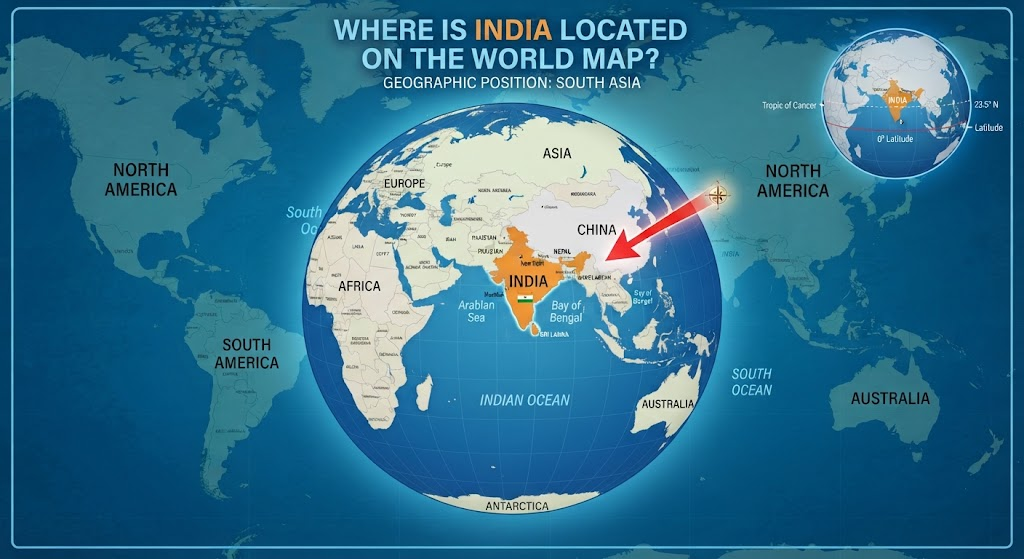

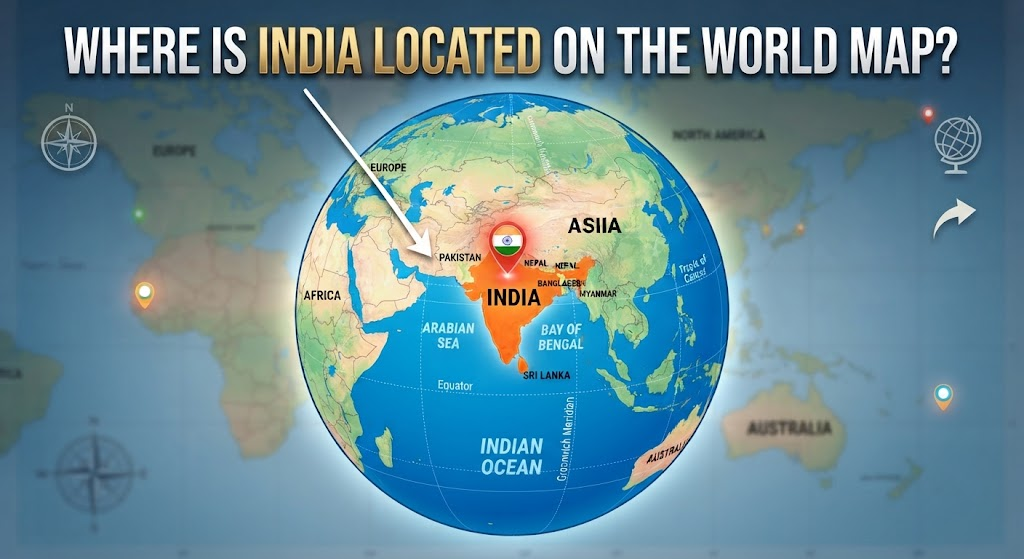
Location plays a huge role in shaping a nation’s climate and story. India is located in the southern region of Asia. It is surrounded by three massive bodies of water: the Arabian Sea to the west, the Bay of Bengal to the east, and the vast Indian Ocean to the south.
Geo Factbook
Because of its shape, the southern half forms a giant peninsula reaching into the ocean. To the north, India shares land borders with several neighboring countries, including Pakistan, China, Nepal, Bhutan, Bangladesh, and Myanmar. This strategic geographic spot has made it a central hub for sea trade and human migration for thousands of years.
Kids World Travel Guide+ 1
The Ancient History and Heritage of India
The historical journey of India began thousands of years ago with the famous Indus Valley Civilization. Early communities built organized cities with complex brick drainage systems and peaceful trading markets. As time passed, powerful empires rose across the region, building magnificent temples, grand forts, and global learning centers.
Geo Factbook+ 1
During medieval times, diverse dynasties introduced new architecture, art forms, and culinary ideas. Later, during the colonial period, the nation struggled under foreign rule for nearly two centuries. Through peaceful movements led by figures like Mahatma Gandhi, independence was finally achieved in 1947. Today, this ancient heritage remains proudly visible in thousands of historical sites nationwide.
EBSCO+ 1
Understanding the Amazing Geography and Landscapes
Few places on Earth offer as much physical variety as India. In the far north, giant snow-capped mountains form a natural protective wall. Just below these mountains lie vast, fertile river plains where millions of families farm crops like rice and wheat.
Geo Factbook
Moving toward the west, you will encounter the dry, golden Thar Desert. Down south, the landscape shifts into rolling hills, thick rainforests, and sunny tropical coastlines. This wide geographic mix creates completely different climates and environments across different states.
Kids World Travel Guide+ 1
The Languages Spoken Across the Land
Communication across India is truly unique and exciting. There is no single language spoken by everyone. Instead, the nation recognizes 22 official languages, with hundreds of regional dialects spoken in local homes.
Geo Factbook+ 2
Hindi is the most widely spoken language, especially across northern states. English is also widely used in schools, offices, higher education, and daily business conversations. If you travel just a few hours in any direction, the spoken language often changes completely!
EBSCO
Colorful Festivals and Traditions
Life in India revolves around joyful celebrations, family gatherings, and historic traditions. Throughout the year, communities come together to mark seasonal harvests, sacred days, and national victories with immense enthusiasm.
EBSCO
- Diwali: Known as the Festival of Lights, where homes light up with small clay lamps, sweets are shared, and fireworks fill the night sky.
- Holi: A cheerful spring festival where people throw bright colored powders on each other in celebration.
- Eid: Marked with prayers, vibrant night markets, family feasts, and acts of charity.
- Christmas: Celebrated with glowing star lanterns, midnight services, and festive meals in coastal regions.
Delicious Food Culture and Spices
Food in India is world-famous for its rich flavors, distinct aromas, and colorful spices. Cooks masterfully mix ingredients like cumin, turmeric, cardamom, and coriander to create incredible regional dishes.
EBSCO+ 1
Northern regions often serve warm flatbreads paired with rich vegetable curries and creamy lentils. In southern areas, meals lean toward light rice dishes, steamed cakes, and coconut chutneys. Because many communities hold deep respect for nature and animals, vegetarian dining is widely practiced and amazingly delicious throughout the country.
Kids World Travel Guide
Modern Cities and Economic Growth
While traditions remain strong, India is rapidly advancing as a global economic powerhouse. Major urban centers like Mumbai, Bengaluru, and Delhi are home to soaring skyscrapers, modern transportation systems, and thriving business hubs.
Geo Factbook+ 1
The nation has become a worldwide leader in software development, space exploration, manufacturing, and medicine. Local engineers and innovators build groundbreaking technology daily, attracting attention and investments from international markets.
Geo Factbook
Incredible Wildlife and Protected Parks
Nature lovers adore the incredible animal species that call India home. From deep teak forests to vast marshlands, strict protection efforts preserve habitats for rare and beautiful wildlife.
Geo Factbook
You can find majestic Bengal tigers roaming protected national reserves, while rare one-horned rhinoceroses thrive in eastern grasslands. Wild elephants, leopards, colorful peacocks, and desert camels also inhabit these varied ecosystems.
Kids World Travel Guide+ 1
Popular Tourist Attractions to Visit
Travelers exploring India are spoiled for choice when planning their sight-seeing adventures. Every state offers iconic landmarks steeped in beauty, culture, and architecture.
EBSCO+ 1
- The Taj Mahal: A stunning white marble monument located in Agra, built as an enduring gift of love.
- Jaipur: Known as the Pink City, famous for massive hilltop forts and grand royal palaces.
- Kerala Backwaters: Peaceful tropical waterways where visitors can relax on traditional wooden houseboats.
- Varanasi: An ancient spiritual city sitting right along the sacred banks of the Ganges River.
Geo Factbook
Everyday Life and Family Values
Family sits at the very heart of daily living in India. Many households embrace multi-generational living, where grandparents, parents, and children share a home and support each other through every step of life.
EBSCO
Respect for elders, warm hospitality to guests, and mutual community support are taught from a very young age. Neighbors routinely share home-cooked food and celebrate life milestones together, creating close-knit, friendly communities.
Conclusion
In conclusion, India is far more than just a location on a map; it is a living, breathing tapestry of history, land, culture, and progress. From the icy Himalayan peaks down to peaceful ocean waves, every part of the country offers unique experiences. As the nation continues to grow into a global leader, its rich traditions remain as vibrant as ever.
Geo Factbook
Have you ever visited or dreamed of traveling here? Share your thoughts, questions, or favorite facts in the comments below!
Frequently Asked Questions (FAQs)
Q1: What is the official capital city of India?
The official capital city is New Delhi, located in the northern part of the nation.
Kids World Travel Guide
Q2: What ocean borders the southern coast of India?
The southern coastline is bordered directly by the vast Indian Ocean.
Kids World Travel Guide
Q3: Which language is spoken the most across the country?
Hindi is the most widely spoken language, followed by English and many regional languages.
EBSCO
Q4: What currency is used for daily transactions in India?
The official currency used for all local trade and daily purchases is the Indian Rupee (INR).
Kids World Travel Guide
Q5: What is the most famous historical landmark to visit in India?
The Taj Mahal, located in the city of Agra, is the most famous historical monument in the country.
EBSCO
Q6: Why is Indian food known for being so spicy and flavorful?
Indian food uses a rich blend of natural spices like turmeric, cumin, and cardamom, which add incredible flavor, deep color, and health benefits.
EBSCO